Moonshine First Flush Darjeeling
I've been drinking a fair amount of teas from Darjeeling (and just over the border on either side - Nepal to the north and Assam to the south and east) recently, probably because I have been reading the book "
Darjeeling: The Colorful History and Precarious Fate of the World's Greatest Tea" by Jeff Koehler. Published in 2015, this is a fun, slightly romantic, but also honest look at the history of tea in Darjeeling. I'll try and do a proper review when I am finished, but since I have been reading the book at lunch, my afternoon tea preference has migrated towards the Darjeelings. One of my favorites right now is the wonderful Moonshine First Flush tea from
Glenburn Estate. Glenburn figures prominently in the book, and the characters and writing make me feel like I have a closer connection to this delicious tea. I also have another connection to this tea, as I regularly talk with several people from the Estate. I had ordered the Moonshine earlier this year, which was from clonal plants and instantly fell in love with it. This batch, which I re-ordered came from Chinese plants, not clonal plants, but was equally delicious. A touch more earthy then a true First Flush, the Moonshine for me
has the perfect combination of floral and ethereal qualities while still maintaining some connection to hills from which the tea is produced.
 |
| The carefully dried leaves. |
 |
| Second steeping. |
 |
| Whole, China varietal leaves. |
I have started to experiment with water - not just in temperature, but in the water itself. Water is perhaps the greatest overlooked component of tea brewing here in the United States, and for me it is a critical part of respecting the tea and the flavor profile crafted by the tea master. Not only is temperature critical for brewing the proper cup of tea - I prefer to brew around 190 degrees for most teas, with a slight cooling taking place over the drinking process of the water to around 185 degrees - but so are the PH and Total Dissolved Solids (TDS). I will write more on this in a separate post, but since I have started to record some of this information with each tea I drink, I'll post it here.
Orchid Dew Green Tea
I brought in a pound of this tea to try for the first time. Produced from a Japanese cultivar in China, this green tea is a fresh, lively green that combines tea growing and processing techniques from Japan and China. Air dried, slightly steamed, and then partially rolled this green was a pleasant surprise, and one that I would certainly buy again. It reminds me of a hearty Mao Feng (as oppossed to the lighter Mao Fengs one often encounters) but with a touch more sweetness and vibrancy. With only a pound, I'm sure it will go fast. At a 20 second steep, I got 402 TDS!
 |
| So green and vibrant. |
 |
| Floating in a sea of green. |
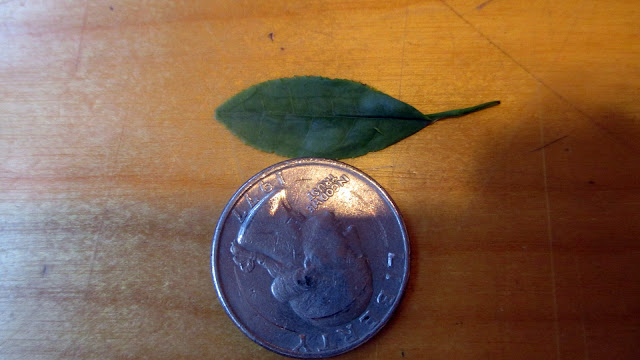 |
| Perfect leaves. |
|
Black Beauty Orthodox Assam
Jumping back from China to India, the Black Beauty Orthodox Assam is the final tea in this post. I'm working on doing a tea tasting with several different teas from Assam to reflect the different terroir found up and down the
Brahmaputra River Valley. Some of the Assams I've been tasting include ones from
Halmari Estate, Mokalbari Estate, Hathikuli Estate, Heritage Tea Estate, Mangalam Estate, and others. The "Black Beauty" from Heritage Tea Estate is the latest that I've had. An orthodox tea (like most we carry from Assam, simply meaning whole leaf as opposed to CTC - cut, tear, curl), the Black Beauty was remarkably sweet, with a light maltiness and rich body. A gold-tips tea, I was surprised by its sweetness, which was more honey like than sugar or malty sweetness, and because it did not have nearly as many gold-tips as the Gold Tip Mangalam which we also have. At a 20 second steep I got 394 TDS and a PH of 5.72! To compare, for Mangalam I get 372 TDS for the same time.
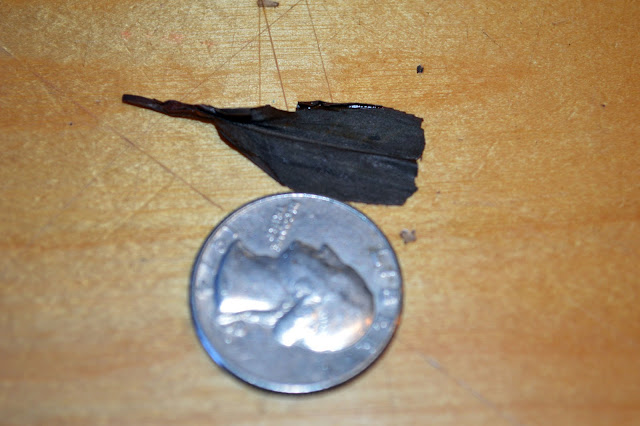 |
| No whole leaves, mostly because of the machine rolling. |
Now, for some depressing news, but first, a cool painting I found by
Sun Wei from the
Tang Dynasty depicting a liesurly day in the country enjoying tea. The painting is supposed to be of royals during the Jin (265-420) and Wei (220-265) dynasties in China. Here it is obvious that tea is still consumed more as a soup or broth than as tea like we know of it today.
OK, so for the
depressing news. I can't comment really on the situation since I am not there and do not know the particulars. Rather, or me this stresses the importance of knowing your sources, knowing your teas, and knowing whom to buy from. We currently do not carry any teas from
Duncan-owned Estates, and I have no plans on doing so in the future. As the tea world continues to shrink and buyers source directly from growers or Estates, human rights issues, the use of pesticides, and greater transparency will continue to be emphasized. I hope the situation rights itself.


